Hearing that your child has a cavity is hard. Hearing that a toddler may need a filling can feel even harder, especially if your child is very young, nervous, or not ready to sit still for treatment.
Silver diamine fluoride, often called SDF, gives some families another option. It is a liquid brushed onto a cavity to help stop it from growing. There is no drilling and no shot. This guide explains how SDF works, who it fits, the tradeoffs to know about, and what to expect at Smile Gallery Pediatric Dentistry in Roseville, CA.
The short version
- SDF is a liquid painted onto a cavity to help stop decay from spreading.
- Treatment takes a few minutes with no drilling, numbing, or shots.
- The decayed part of the tooth turns dark or black. Healthy enamel does not change color.
- SDF often works well for young kids, nervous kids, and kids with special health care needs.
- Many teeth need more than one application, and some still need a filling or crown later.
What is silver diamine fluoride?
SDF is a clear liquid made with silver and fluoride. The silver helps fight the bacteria that cause cavities. The fluoride helps harden the tooth. Together, they can help stop a cavity in its tracks.
The FDA cleared SDF to treat tooth sensitivity. Dentists also use it to help stop cavities, and the American Academy of Pediatric Dentistry supports this use for baby teeth as part of an overall cavity care plan. At our office, we use Advantage Arrest SDF.
How does SDF treatment work?
Here is what happens at a typical SDF visit:
- Dr. Dan Truong checks the tooth and confirms SDF is a good fit.
- We protect the gums and lips, then dry the tooth.
- A tiny brush paints the liquid onto the cavity.
- The liquid sits for about a minute, and then your child is done.
Most kids handle it well. Some notice a metallic taste for a short time. Your child can usually eat and drink normally afterward, unless we give you other instructions.
Who is a good fit for SDF?
SDF may be a good choice if your child:
- Is very young and not ready for traditional fillings
- Feels very anxious about dental care
- Has special health care needs that make longer visits hard
- Has several small cavities that need to be managed over time
- Has a cavity in a baby tooth that will fall out in the next year or two
SDF is not right for every tooth. It is not used on teeth with signs of infection, such as an abscess or ongoing pain. It is also not a fit for children with a silver allergy or painful sores in the mouth. Dr. Truong will talk through your child's health history before recommending it.
What about the black staining?
This is the biggest tradeoff, and it is important to know before treatment. SDF turns the decayed part of the tooth dark brown or black. That stain is a sign the cavity has hardened, and it does not go away on its own.
Healthy parts of the tooth do not stain. If SDF touches the gums or skin, it can leave a temporary mark that fades in a few days. It can also stain clothes and countertops for good, so we take care to keep it where it belongs.
For back teeth, many families do not mind the color. For front teeth, some parents choose to cover the tooth later. If appearance matters to you, ask about pairing SDF with a white zirconia crown once your child is ready.
Is SDF a permanent fix?
Not always. SDF can help stop a cavity, but it does not rebuild the missing part of the tooth. Here is what to expect over time:
- Many cavities need a second or third application to stay stopped.
- We check treated teeth at follow-up visits to see whether the decay has hardened.
- Some teeth still need a filling or crown later, especially larger cavities.
Think of SDF as a way to buy time and protect your child's teeth until a long-term plan makes sense.
How does SDF fit into your child's overall care?
SDF works best alongside good daily habits and regular visits. That includes brushing twice a day, limiting sticky snacks and sugary drinks, and keeping up with checkups and cleanings.
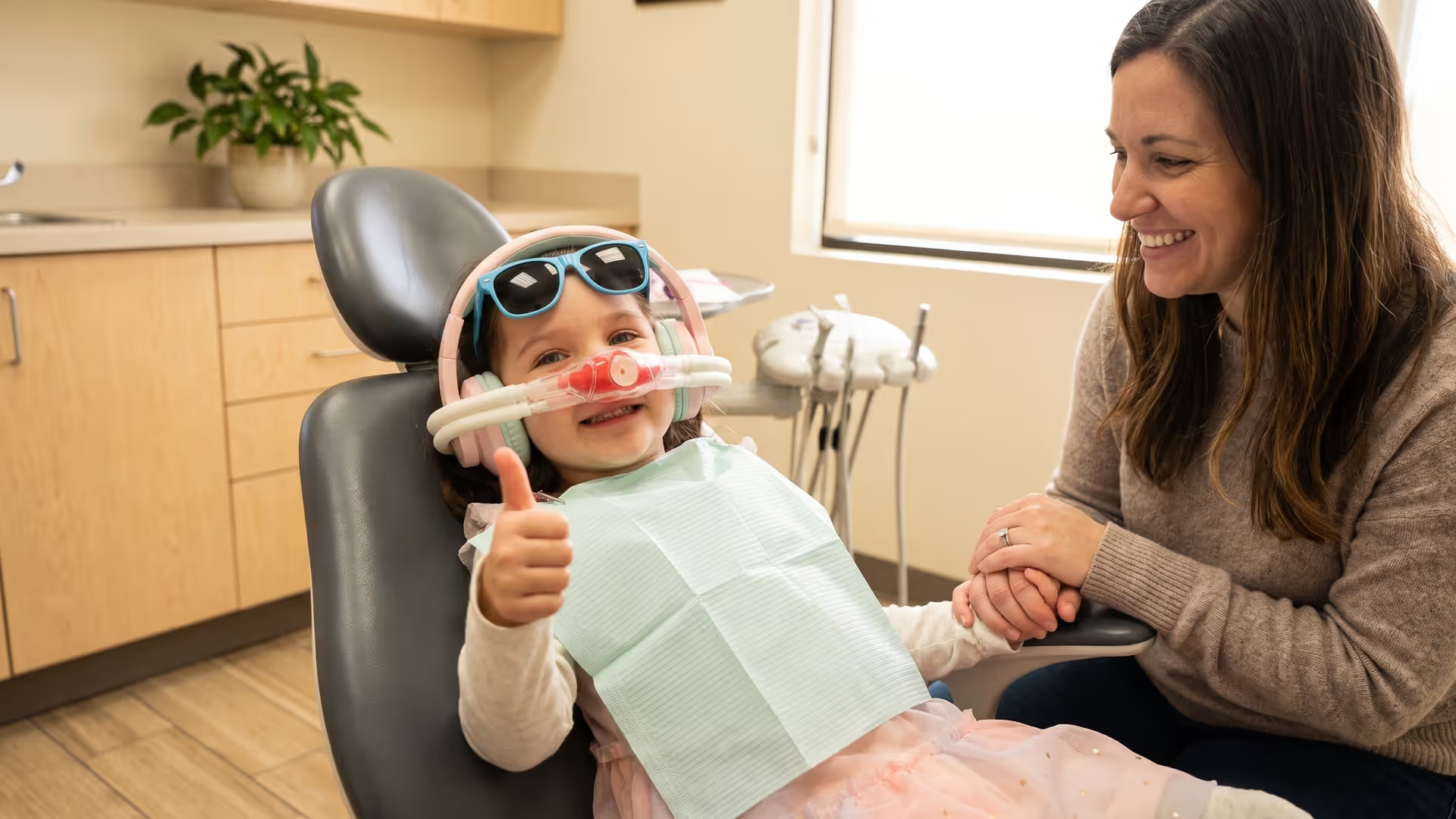
We also offer nano-hydroxyapatite as a fluoride-free option for daily cavity protection, and growth and development checks to keep an eye on how your child's mouth is changing. If your child needs more extensive treatment, nitrous oxide can help them relax. When general anesthesia is needed, an anesthesiologist can come to our office, so your family does not need to go to a hospital.
Frequently asked questions
Does SDF hurt?
No. There is no drilling or shot. Most kids feel nothing more than the brush on the tooth.
How long does SDF last?
It varies by tooth. Many teeth need a repeat application at a later visit. Dr. Truong will check the tooth at follow-ups and let you know if more is needed.
Will the stain show on my child's permanent teeth?
SDF only stains the tooth it is placed on, and only the decayed area. Baby teeth that were treated will fall out on their own when it is time.
Can SDF be used on permanent teeth?
In some cases, yes. Dr. Truong will explain whether it is a fit for your child's specific tooth.
Do you work with dental insurance?
We work with most PPO dental plans as an out-of-network provider. Our team can verify your benefits and submit claims for you.
Pediatric dentist for SDF in Roseville
If your child has a cavity and you want to learn about gentle treatment options, call (916) 782-5503 to schedule a visit. Smile Gallery Pediatric Dentistry, 568 N Sunrise Ave STE 350, Roseville, CA 95661.